Karate Class Online : FREE
      Karate Class. Learn Karate Online, Free online classes
Now No Sign up needed
Just scroll down the page and start learning!!
This is your Karate Class!

Looking for a Karate School?


Get on Our Email list.

Karate Schools San Antonio
Karate Schools Winston Salem

Wado Ryu Videos Sensei Mike
Akido
Karate
Escrima
Hsing-i
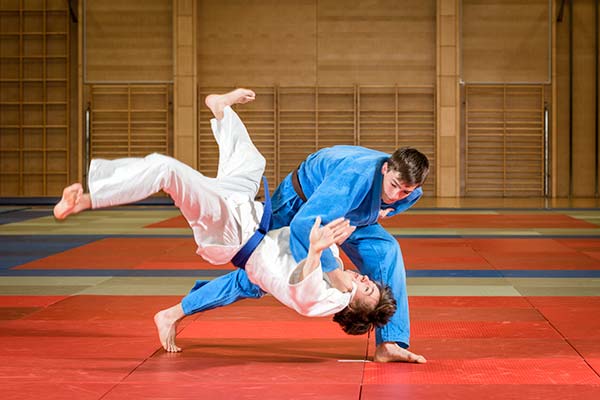
Judo
Juken-do
Kalaripayit
Kendo
Ken Jutsu
Kung Fu
Nin Jitsu
Shotokan
Silambam
Sumo
Tae Kwon Do
Tai chi Chuan
Chito Ryu Karate
Gojo Ryu Karate
Isshin Ryu Karate
Gojo Ryu Karate
Shuri Ryu Karate
Kyokushinkai Karate
Seido Juku Karate
Keichu Ryu Karate
Shorin Ryu
Shotokan Karate
Shito Ryu Karate
Gojo Ryu Karate
Gojo Ryu Karate


How learn karate .com's online karate class works

We know that a lot of people want to take karate classes but just don't have the time to get to a dojo or a karate school, many others would love to head to a local Karate School but dont have one close to home. We know that nothing can replace real one on one karate class but if thats just not possible learnkarate.com can help.

All of our online karate classes are 100% free. You can view the videos, look at the still shots and priactice your karate in your home at your pace.

I cant belive how nice this system works, who would have thought "online karate class"? But it works I love it.
Bill, Australia

I signed my wife up and now she is totally kicking my butt! Ha Ha. Thanks to your online lessons I feel that she can defend herself better now. Thank you so much.
Jow W, Niagara Falls, NY

Both of my kids are using your FREE online karate lessons. I cant thank you enough! They hardly watch tv anymore. Your karate lessons are great!
Cindy K, Sweden

About Wado Kai Karate

Master Hironori Otsuka was born June 1, 1892, in Shimodate, Japan, where his father, Dr. Tokujiro Otsuka, operated a clinic. As a boy he listened to a samurai warrior, his mother's uncle, tell thrilling stories of samurai exploits. This may well have been where the first seeds were sown that would later be some of the guiding principles and philosophies of Wado karate.

Otsuka Sensei began martial arts training at five-years of age under his great uncle Chojiro Ibashi (Shintani & Reid, 1998) and by age thirteen was formally studying shindo yoshinryu jujutsu, a traditional Japanese martial art from which modern judo was derived, under Yokiyoshi Tatsusaburo Nakayama. Whereas most schools at that time stressed throwing or grappling techniques, this school stressed atemi (striking and kicking techniques). His martial arts training continued even when, in 1911, he entered Waseda University to study business administration. It was during this period that master Otsuka began studying atemi-style Toshin-Kenpo while he continued his studies in shindo yoshinryu. When his father died in 1913 he was forced to quit school and return to Shimodate to work in a bank.

By 1921, at the relatively young age of 29, he was awarded the coveted menkyo-kaiden, designating him the successor as master of this style. A year later he began karate training under Gichin Funakoshi, the man who introduced karate to Japan from Okinawa. Otsuka Sensei had heard of Funakoshi's visit to Japan and journeyed to Tokyo to witness the demonstration. Later, when Funakoshi decided to stay in Japan and teach karate at the Meishojuku Gymnasium, Otsuka Sensei asked to stay and study with him. In 1927 he left the bank at Shimodate,and became a medical specialist treating martial arts injuries in order to devote more time to the martial arts. In 1929 he started the first karate club at Tokyo University, and the next five years would see him establish clubs in many other universities as one of Funakoshi's most senior students. During this time, Otsuka Sensei also had the opportunity to study with other prominent karate stylists of the time, including Kenwa Mabuni of the shito-ryu style, and Choki Motobu, who was known for his emphasis on kumite and the Naihanchi kata.

However, Otsuka Sensei eventually began disagreeing with Master Funakoshi over developmental issues, particularly Otsuka Sensei's desire to develop free sparring drills, which Funakoshi denounced as an impurity in karate training, with a potential for great injury due to the deadly nature of some karate techniques. By the early 1930's Otsuka Sensei eventually parted company with Funakoshi, and traveled to Okinawa to learn more deeply of karate from the masters who had instructed Funakoshi. It was his belief that Funakoshi had over-simplified and over-modified several karate techniques and katas in the interests of teaching large groups of beginners. Otsuka Sensei combined knowledge of Funakoshi's karate with his new knowledge of Okinawan karate, and added several of his own adaptations from Japanese bushido (the way of the warrior) martial arts to form Wado karate.

Otsuka Sensei eventually opened his own dojo as the Dai Nippon Karate Shinko club in 1934. According to records published by Shintani & Reid (1998), the name changed to Dai Nippon Karate-do Shinbu-Kai, then to Ko-Shu Wado-Ryu Karate Jutsu, which was subsequently shortened to Wado-Ryu Karate Jutsu, followed finally by Wado Ryu. Otsuka Sensei registered Wado karate in 1940 at Butokukai, Kyoto, and it has become one the four major styles of Japanese karate, the others being: Shotokan, Shito, and Goju. In the same year, Otsuka Sensei organized the All Japanese Karate-do Federation, Wado-Kai, which serves as the worldwide sanctioning body for Wado karate and its affiliates. As early as 1934 he had developed rules and regulations for competitive free sparring to be incorporated into his system, the first karate style to do so. These rules have been wholly or partially adopted by virtually all modern martial arts competitions.

In 1966, Otsuka Sensei received the Kun-Go-To, or "The Fifth Order of Merit of the Sacred Treasure" from the Emperor of Japan, who also bestowed upon him the Soko Kyokujitsu-Sho medal for Otsuka Sensei's contributions to the development and promotion of karate. In 1972, he received the Shodai Karate-do Meijin Judan or "First Generation Karate-do Master of the Tenth Dan" and was designated the head of all martial arts systems within the All Japan Karate-do Federation. Otsuka Sensei passed away on January 29, 1982, after which Wado karate separated into several organizations based upon differences in leadership and teaching concepts.


Karate Uniform


KARATE

How To Tie Your Karate Belt
Karate Warm Ups 1
Karate Warm Ups 2
Karate Punches 1
Karate Punches 2
Karate Blocks
Karate Kicks 1
Karate Kicks 2
Karate Kicks 3
Kicks 4
Basic Karate Techniques 1
Karate Kata Pinan Nidan
Karate Kata Pinan Sandan
Karate Kata Pinan Yodan
Karate Kata Kushanku
Karate Kata Naifanchi
Karate Kata Seishan
Karate Kata Chinto